What moves your specific price up or down
Two South Bend buildings can choose the same membrane and still get very different per square foot prices, because a handful of building specific factors push the number around. Knowing them helps you understand your quote and, in some cases, gives you levers to manage the cost.
Roof size
Larger roofs usually cost less per square foot than small ones, because fixed costs like mobilization and setup spread across more area, and crews work more efficiently on big open fields. A small, complex St. Joseph County roof can carry a surprisingly high per square foot price for exactly the opposite reason. So size works in your favor on a big building and against you on a small one.
Roof condition and what is underneath
The condition of the deck and insulation is the wildcard. A sound roof needing only a new membrane prices near the low end of its system range, while a roof with wet insulation, deck rot, or corrosion needs repair that adds to the total. This is why a quote without an inspection is a guess: until someone sees what is under the membrane, the deck repair portion is unknown.
Building height and access
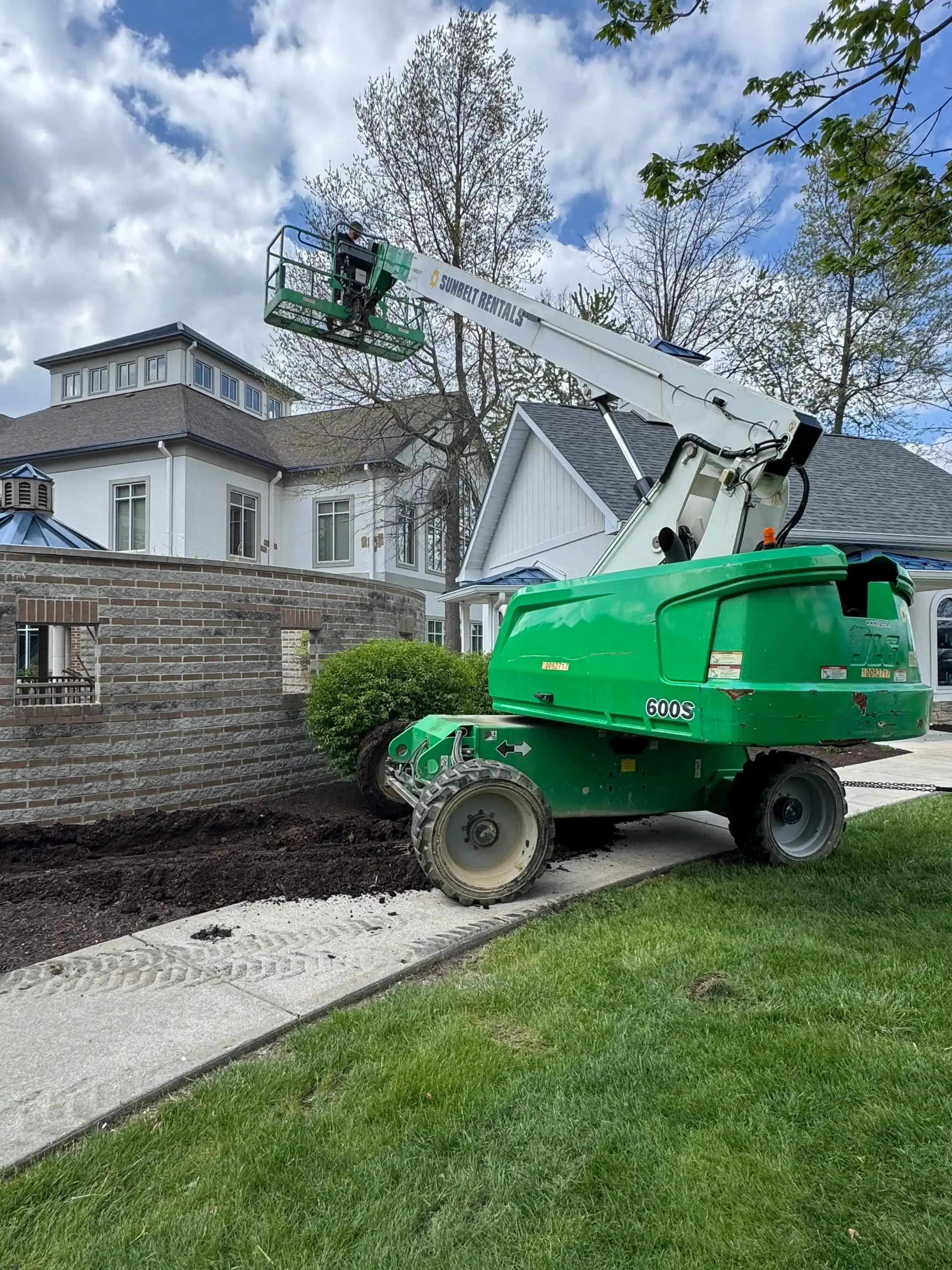
Getting materials and crews onto the roof costs more on a taller South Bend building or one with difficult access. A single story building with easy ground access is cheaper to work on than a multi story building requiring a crane and tighter logistics. Access is a real line in the labor cost, and it varies a lot building to building.
Penetrations and complexity
Every pipe, vent, curb, skylight, and piece of rooftop equipment is a detail that must be flashed and sealed, and details are skilled, time consuming work. A roof cluttered with penetrations costs more per square foot than a clean, open roof of the same size, because so much of the labor goes into the transitions rather than the field. Heavy rooftop HVAC and exhaust on a building add to this.
Code and energy requirements
Current building and energy codes can require insulation upgrades, additional drainage, or wind uplift measures that affect the price, and these are not optional. A replacement often must bring the roof assembly up to current code, which can add cost relative to simply matching what was there. A good contractor factors this in rather than quoting a code deficient roof that creates problems later.
Estimating where your roof lands
None of this means the lowest price is always wrong or the highest always right. It means the price has to be read in context, against the scope, the system, what is included beneath the membrane, the warranty, and who is doing the work. A owner who gathers that context can spot both a fair deal and a false economy, and can choose with confidence rather than picking a number and hoping. The point of understanding the pricing is to make the decision a clear one instead of a gamble on the roof over your building.
The other thing the per square foot figure cannot capture is the value of the work being done right, which only shows up over time. A roof installed by a careful crew, with clean seams and properly flashed details, quietly does its job for decades, while a cheaper roof rushed by an inexperienced crew announces its problems within a few seasons. On your St. Joseph County building, the quality of the installation determines whether you get the service life the system is capable of, and that is worth as much consideration as the number on the quote.
It is worth keeping the long view in mind while you focus on the per square foot number, because a commercial roof is a twenty year decision, not a one time purchase. The price you pay today is only part of the picture, and the system that costs a little more but lasts longer, needs less maintenance, and saves on energy can be the cheaper roof across its life. A South Bend owner who weighs total cost rather than first cost tends to make a decision they are still happy with a decade later, which is exactly what you want from an expense this size.
None of this means the lowest price is always wrong or the highest always right. It means the price has to be read in context, against the scope, the system, what is included beneath the membrane, the warranty, and who is doing the work. A owner who gathers that context can spot both a fair deal and a false economy, and can choose with confidence rather than picking a number and hoping. The point of understanding the pricing is to make the decision a clear one instead of a gamble on the roof over your building.
The other thing the per square foot figure cannot capture is the value of the work being done right, which only shows up over time. A roof installed by a careful crew, with clean seams and properly flashed details, quietly does its job for decades, while a cheaper roof rushed by an inexperienced crew announces its problems within a few seasons. On your St. Joseph County building, the quality of the installation determines whether you get the service life the system is capable of, and that is worth as much consideration as the number on the quote.
It is worth keeping the long view in mind while you focus on the per square foot number, because a commercial roof is a twenty year decision, not a one time purchase. The price you pay today is only part of the picture, and the system that costs a little more but lasts longer, needs less maintenance, and saves on energy can be the cheaper roof across its life. A South Bend owner who weighs total cost rather than first cost tends to make a decision they are still happy with a decade later, which is exactly what you want from an expense this size.
None of this means the lowest price is always wrong or the highest always right. It means the price has to be read in context, against the scope, the system, what is included beneath the membrane, the warranty, and who is doing the work. A owner who gathers that context can spot both a fair deal and a false economy, and can choose with confidence rather than picking a number and hoping. The point of understanding the pricing is to make the decision a clear one instead of a gamble on the roof over your building.
Put these factors together and you can estimate whether your building sits at the low or high end of its system range. A large, sound, simple, single story South Bend roof leans low. A small, complex, multi story roof with deck issues and heavy rooftop equipment leans high. South Bend Commercial Roofing accounts for every one of these during a free inspection and gives you a price that reflects your actual building. Call (765) 676-3491 for a real number. That accuracy is what separates a budget you can trust from a guess that falls apart.